

International Exchange in River Management: LIFE IRIS Meets LIFE Ebro Resilience in Spain
How can flood protection and ecological goals go hand in hand? This question is not only one of the most important questions in the IRIS project, other projects across Europe are searching for innovative solutions in river management too. One of these projects is LIFE Ebro Resilience in Spain, with which we have been in regular exchange for over two years now.


From Screen to Practice
In several online meetings we have discussed technical approaches and methods, but also topics such as public participation, land availability, and the acceptance of river restoration measures. After these virtual meetings and an initial in-person contact at the General Assembly of the European Geosciences Union (EGU) in Vienna at the beginning of May, we finally had the opportunity to get to know the project on the ground: From May 27 to 29, part of our team travelled to Spain.
River Management Meets Agriculture
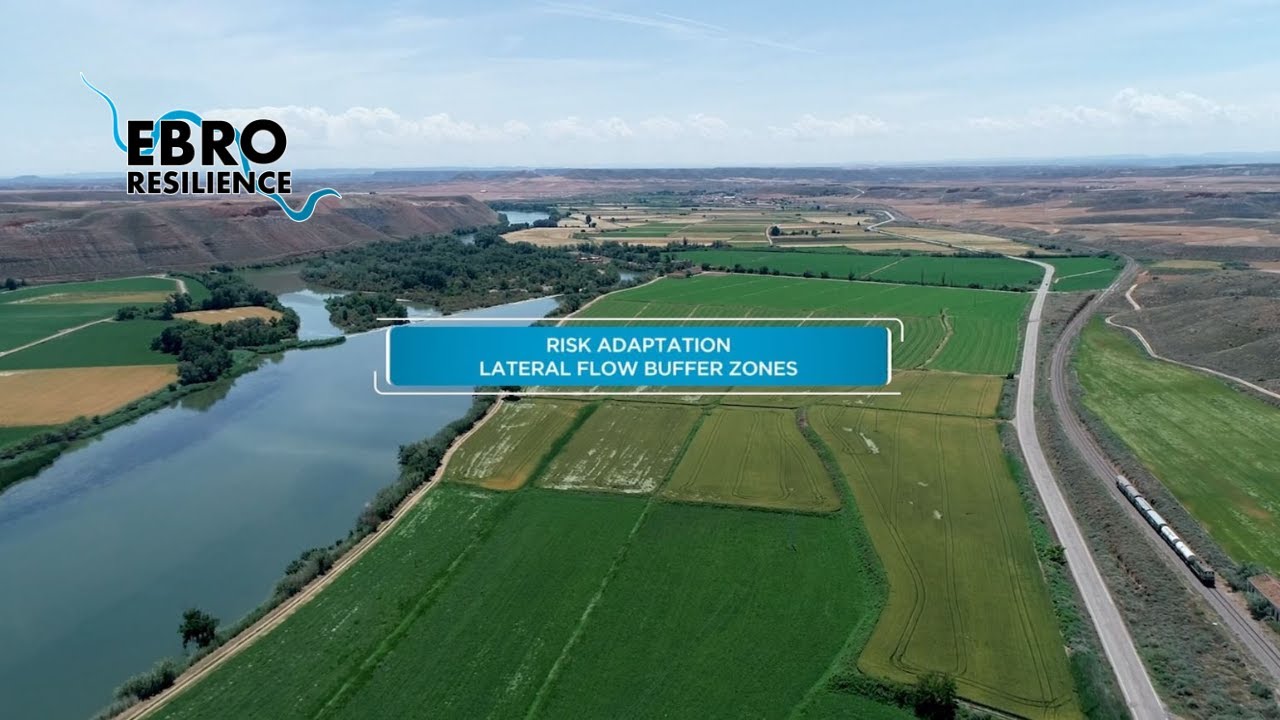
On the first day we visited the Osera de Ebro – Fuentes de Ebro section, where a particularly exciting approach is currently being tested: the so-called “Lateral Flow Buffer Zones” (LFZ). Intensively used agricultural areas are being redesigned here so that they can act as natural buffer zones during flooding, thereby mitigating damage. We had already heard a presentation on this at the EGU. It was all the more impressive to now see it in practice.


Restoration in Practice
On the second day we continued on to Alfaro (La Rioja), where we looked at ongoing restoration works: in the La Roza meander, the river is being given more space again, and restoration measures are already planned for the Castejón meander (Navarra) as well.
Flood Management on the Ebro
The visit concluded with a stop at the Confederación Hidrográfica del Ebro in Zaragoza (the responsible authority for the Ebro catchment area). There, we gained insights into the automatic hydrological information system and flood risk management on the Ebro.


International Exchange in River Management Continues
Despite the extreme heat (37 degrees in Zaragoza) we had a wonderful and educational time and took a great deal away with us. The next step is already planned for autumn 2026: a return visit by the Spanish team to us. So the exchange continues.
By the way, last year a Spanish film crew also visited the IRIS project. You can find out more about that here.
Photo Credits: Helena Mühlmann, Hannes Wild, Johannes Steinkellner
LIFE IP IRIS: From theory to Practice
GE-RM | MONITORING | MEASURES
Restoration measures by LIFE-IRIS

Revitalisation measures create new habitats for fish and other…

In the Marktau area near Ottensheim and Wilhering, an…

Between Obergrafendorf and Weinburg, the Pielach River will soon…

New habitats and improved flood protection on the Lafnitz…


